Volleyball
PVL Champions List: Every Conference Winner
Every PVL champion since 2017, conference by conference: All-Filipino, Reinforced, Invitational and more, plus the teams with the most titles and key records.
7 min read
What is the Volleyball Nations League? How the VNL format works, how teams qualify and are relegated, prize money, and the Philippines' role as a VNL host.
The Volleyball Nations League (VNL) is the FIVB’s main annual international competition for national volleyball teams, held separately for women and men. Teams play a preliminary phase over several weeks in host cities around the world, and the strongest eight advance to a knockout Finals (Wikipedia).
This guide explains where the VNL came from, how the format works, how teams get in and drop out, and why it matters for volleyball fans in the Philippines.
| Item | Details |
| Organiser | FIVB, the sport’s world governing body |
| First edition | 2018 |
| Replaced | The women’s World Grand Prix and the men’s World League |
| Teams | 18 per edition (women’s and men’s) since 2025 |
| Format | Multi-week preliminary phase, then an eight-team knockout Finals |
| Relegation | Last-placed team drops out; Challenger Cup winner promoted |
| Philippine link | The Philippines hosted a Women’s VNL week in 2026 |
Sources: Wikipedia, FIVB, The Post.
The FIVB announced the VNL in October 2017 as a joint project with media company IMG and 21 national federations. It replaced two long-running annual events: the women’s World Grand Prix, which ran from 1993 to 2017, and the men’s World League (Wikipedia).
The first women’s VNL took place from May to July 2018, with the final round in Nanjing, China, where the United States beat Turkey to win the inaugural title. The 2020 edition was cancelled because of the COVID-19 pandemic, and the competition returned in 2021.
The competition has two phases.
Under the format used since 2022, each team plays 12 matches across three weeks of competition, with teams split into pools that play in different host cities each week. There is a one-week gap between events (Wikipedia). All results count toward a single overall table.
Because the weeks are spread across several countries, teams travel between continents during the preliminary phase, which is one reason squads rotate.
The top eight teams in the overall standings go straight to a knockout Finals: four quarterfinals, two semifinals, and the bronze and gold medal matches. The Finals are held in a host city chosen in advance.
Each team registers a long list of players for the season and names a smaller match-day squad each week. In 2026, teams named a 12 to 14-player squad each week from a 30-player list (Wikipedia). Coaches use this to rest key players and test new ones, so the same country can look quite different from one week to the next.
From 2025, the VNL expanded to 18 teams and dropped the old split between permanent “core” teams and “challenger” teams (Wikipedia). Now:
This keeps the field open to rising nations and means every match counts, even for teams far from the Finals.
The VNL pays prize money for results. In the preliminary round, a winning team earns US4,250. In the Finals, the champions receive US500,000, with smaller amounts down to eighth place. Prize money is the same for the women’s and men’s competitions under the FIVB’s gender equality policy (Wikipedia).
The Philippines has become a regular VNL stop. In 2026, it hosted a Women’s VNL week in June, one of four major international volleyball events the country hosted that year (The Post), and it was announced as a host for 2026 and 2027 (SPIN.ph). Hosting gives Filipino fans the chance to watch the world’s top national teams in person.
The Philippine national teams, Alas Pilipinas, are not regular VNL participants, but hosting and regional events such as the AVC Nations Cup are part of their path to higher-level international play. See [LINK: Alas Pilipinas].
| Term | Meaning |
| Preliminary phase | The multi-week stage where all teams play and results feed one overall table |
| Week | One block of matches in a host city |
| Overall standings | The combined table after all preliminary matches |
| Finals | The eight-team knockout stage at the end of the season |
| Volleyball Challenger Cup | The event that decides which team is promoted into the next VNL |
| World ranking points | Points that VNL results add to each team’s FIVB world ranking |
The VNL is the best regular look at the world’s top national teams. For fans, it is a chance to see rising players and how national teams are shaping up ahead of bigger events like the World Championship and the Olympics. Because results feed into world rankings, every match also affects seeding for future tournaments. And because squads rotate from week to week, VNL results are best read over several weeks rather than one match at a time.
For Filipino fans, the VNL also shows where the national programme stands. Hosting VNL weeks brings world-class volleyball to Filipino crowds and gives young Filipino players a close view of the international game. It also helps the country build experience in running major events, alongside hosting the 2025 FIVB Men’s World Championship.
| Competition | Who plays | How often |
| VNL | Top national teams | Every year |
| World Championship | National teams | Every two years under the current FIVB calendar (confirm) |
| Olympics | National teams | Every four years |
| Club leagues (PVL, Spikers’ Turf) | Club teams | Every season |
The Volleyball Nations League, an annual FIVB competition for national teams, held for both women and men.
Eighteen teams in each competition since the 2025 edition.
In 2018, replacing the women’s World Grand Prix and the men’s World League.
The Philippines has hosted VNL weeks, including a Women’s VNL week in 2026, but Alas Pilipinas are not regular VNL participants.
Since 2025, the last-placed team drops out, and the Challenger Cup winner is promoted for the next edition.
No. The VNL is a yearly league-style competition with a preliminary phase and Finals. The World Championship is a separate FIVB tournament that decides the world champions.
Follow the national teams in [LINK: Alas Pilipinas], then see how club volleyball works in [LINK: PVL Philippines] on ArenaPlus Insider. If you also follow the betting side, Handicap and Over/Under Betting Explained explains how volleyball lines work, and Insider covers other sports in ArenaPlus Basketball and Football Betting on ArenaPlus: A Beginner’s Guide.
For adults 21 and over. Gambling can be addictive; please play responsibly.
Keep reading
Every PVL champion since 2017, conference by conference: All-Filipino, Reinforced, Invitational and more, plus the teams with the most titles and key records.
7 min read
Meet all nine PVL teams for 2026–27: head coaches, captains, recent results and what to know about each club, plus which teams have left…
7 min read
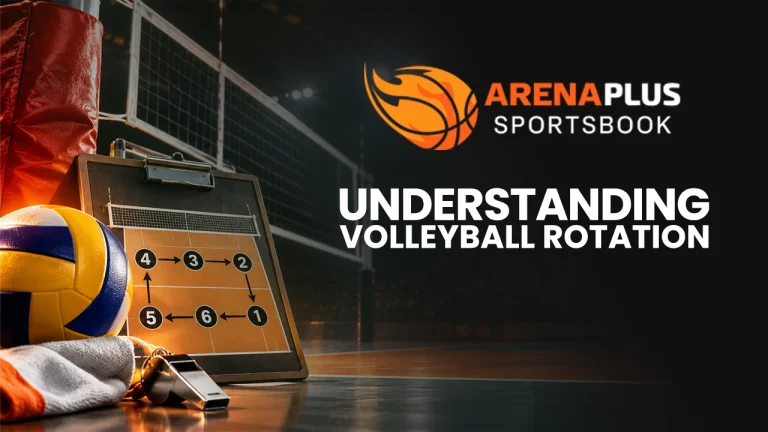
How volleyball rotation works: the six positions, when teams rotate, overlap and rotation faults under the 2025–2028 rules, and the 5-1, 6-2 and 4-2…
7 min read